Are You Sitting Too Much?
Are you sitting too much?
I can sit down at my laptop in the morning to answer a few emails, start editing something, move onto another job and suddenly realise several hours have passed and I’ve barely left my chair.
And I don’t think I’m alone.
For many of us, everyday life has become incredibly convenient but also incredibly sedentary. We work at computers, drive places, watch television and spend time on our phones. You can even complete a workout in the morning and then spend a surprisingly large proportion of the rest of your day sitting down.
So, while structured exercise is incredibly important, I’ve started thinking much more about something simpler: how much are we actually moving during the rest of the day?

A Workout Is Only One Part of Your Day
Let’s say you complete a 30-minute workout in the morning. That’s fantastic, and you’ve already done something positive for your health.
However, there are still another 23 and a half hours in the day.
That doesn’t mean you should spend those hours constantly exercising, of course. We all need to sit, work and rest. Nevertheless, long periods without much movement can quickly add up.
Current UK physical activity guidance encourages adults to be active every day, while also reducing sedentary time and breaking up long periods of inactivity. nhs.uk
That’s something I’ve become much more conscious of myself. I might have trained that morning, but if I’ve subsequently spent six hours staring at my laptop without moving, there’s still an opportunity to make the rest of my day a little more active.
Start With the Moments You Already Have
The good news is that moving more doesn’t necessarily mean finding another hour in your day for exercise.
Instead, look at the routine you already have.
Could you walk while you’re making a phone call? Take the stairs rather than the lift? Walk to the shops instead of driving? Get up while the kettle boils? Spend ten minutes outside after lunch?
None of those things sound particularly impressive, and that’s precisely the point.
Movement doesn’t only count when you’re wearing workout clothes.
Housework counts. Gardening counts. Walking to the station counts. Playing with your children or grandchildren counts. Dancing around the kitchen certainly counts.
In fact, the latest UK guidance makes the message particularly simple: any activity is better than none, and every minute counts. GOV.UK
Break Up Long Periods of Sitting
This is probably the one I’ve had to become most conscious of.
When I’m concentrating on something at the computer, I can completely lose track of time. Therefore, rather than relying on myself to suddenly remember that I haven’t moved for hours, I’ve found it useful to create reasons to get up.
That could be as simple as getting a glass of water, walking around while taking a phone call or standing up between tasks.
The NHS also suggests practical ideas such as taking the stairs, walking during breaks and setting reminders to get up regularly. nhs.uk
You don’t necessarily need to turn those breaks into mini workouts either. Sometimes simply standing up, walking around and changing position is enough to break up a long period spent sitting.
Make Walking Part of Your Routine
Walking is perhaps one of the easiest ways to add more movement to your day because it doesn’t require equipment, a gym membership or learning a complicated exercise routine.
Rather than always thinking of a walk as a dedicated hour-long activity, try fitting smaller walks around things you’re already doing.
Perhaps you walk for ten minutes before starting work, go around the block after lunch or get off the bus slightly earlier.
Those shorter periods of movement still contribute to your overall activity. NHS guidance similarly emphasises that activity can be accumulated throughout the week rather than needing to happen in one long session. nhs.uk
Don’t Replace Your Workouts
Of course, moving more throughout the day doesn’t mean structured exercise suddenly becomes unnecessary.
We still need to challenge our bodies.
UK guidance recommends adults aim for at least 150 minutes of moderate-intensity activity each week, or 75 minutes of vigorous activity, alongside muscle-strengthening activities on at least two days. nhs.uk
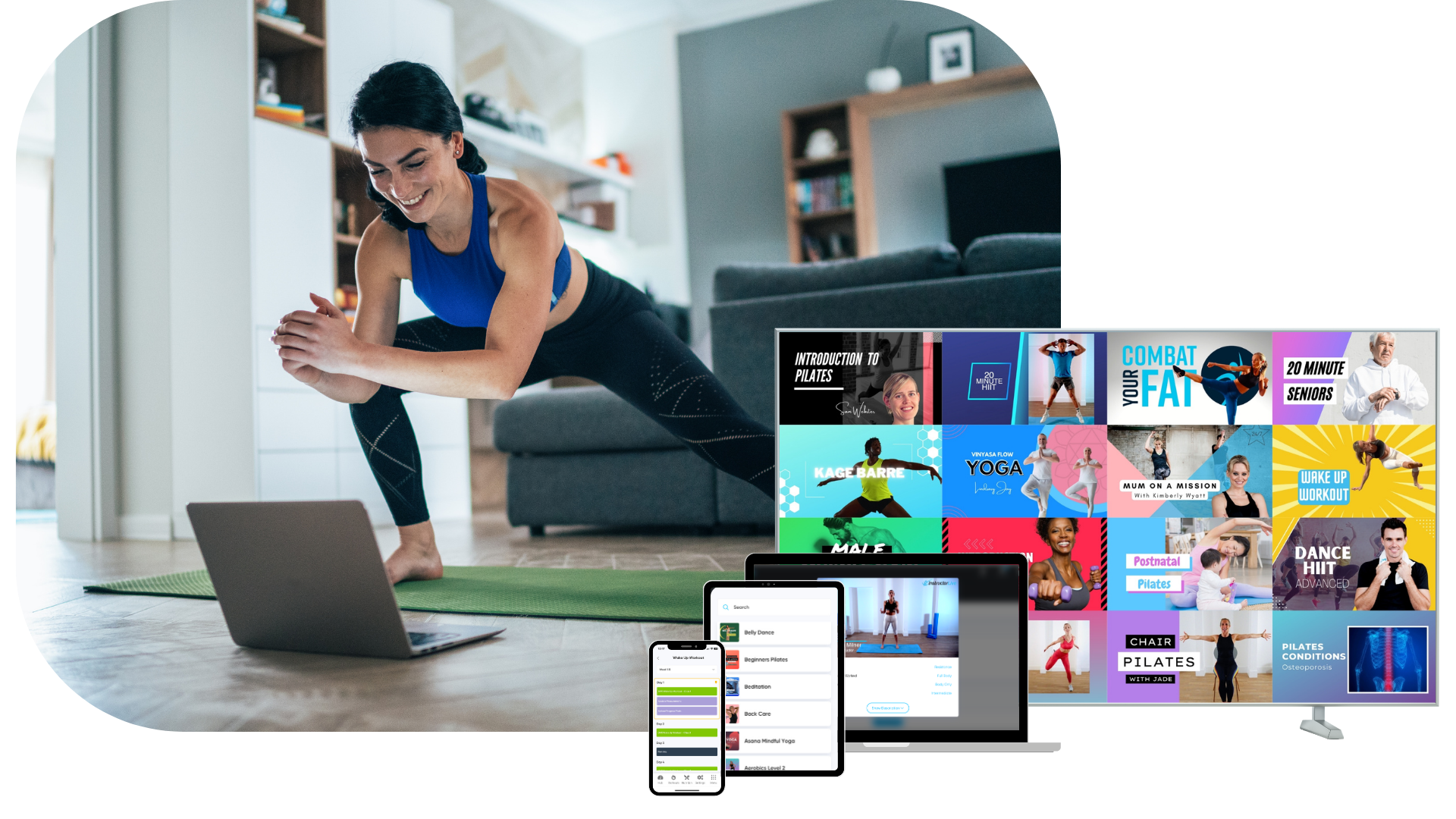
That’s where your InstructorLive workouts can fit into the bigger picture.
A programme such as 20 Minute Toning, for example, gives you a focused strength-based workout you can fit into your day. Then, rather than thinking “workout done, that’s my movement finished for today”, you can continue looking for opportunities to be active outside that session.
It’s not really about choosing between workouts and everyday activity.
Ideally, the two work together.
Find What Works With Your Life
I’m increasingly convinced that the best ways to become more active are often the ones that require the least thought.
If going for a walk after dinner becomes part of your routine, eventually you don’t have to persuade yourself to do it every night. If you always take the stairs at work, it simply becomes what you do.
You don’t need to turn your entire life into a fitness challenge or start counting every movement you make.
Instead, look for little opportunities.
Stand up.
Walk somewhere.
Stretch your legs.
Do the gardening.
Put some music on while you’re cooking.
And then, when it’s time for your workout, enjoy that too.
The Takeaway
My working life is considerably less physical than it used to be, and that’s made me realise that staying active now requires a little more conscious effort.
I still train, but I’m also trying to become better at noticing the hours between the workouts.
Because ultimately, being active isn’t only about what happens during a 20 or 30-minute exercise session.
It’s about how movement fits into your life as a whole.
So, once you’ve finished reading this, perhaps don’t immediately click onto the next thing.
Get up and have a little walk first.